The main causes of brazed joint defects and how to improve process quality and reliability
Brazing is a reliable joining process widely used across industry, but achieving a high-quality joint requires careful control of several parameters.
The choice of brazing alloy, the use of brazing flux, surface preparation, joint geometry and thermal cycle management can all influence the final result.
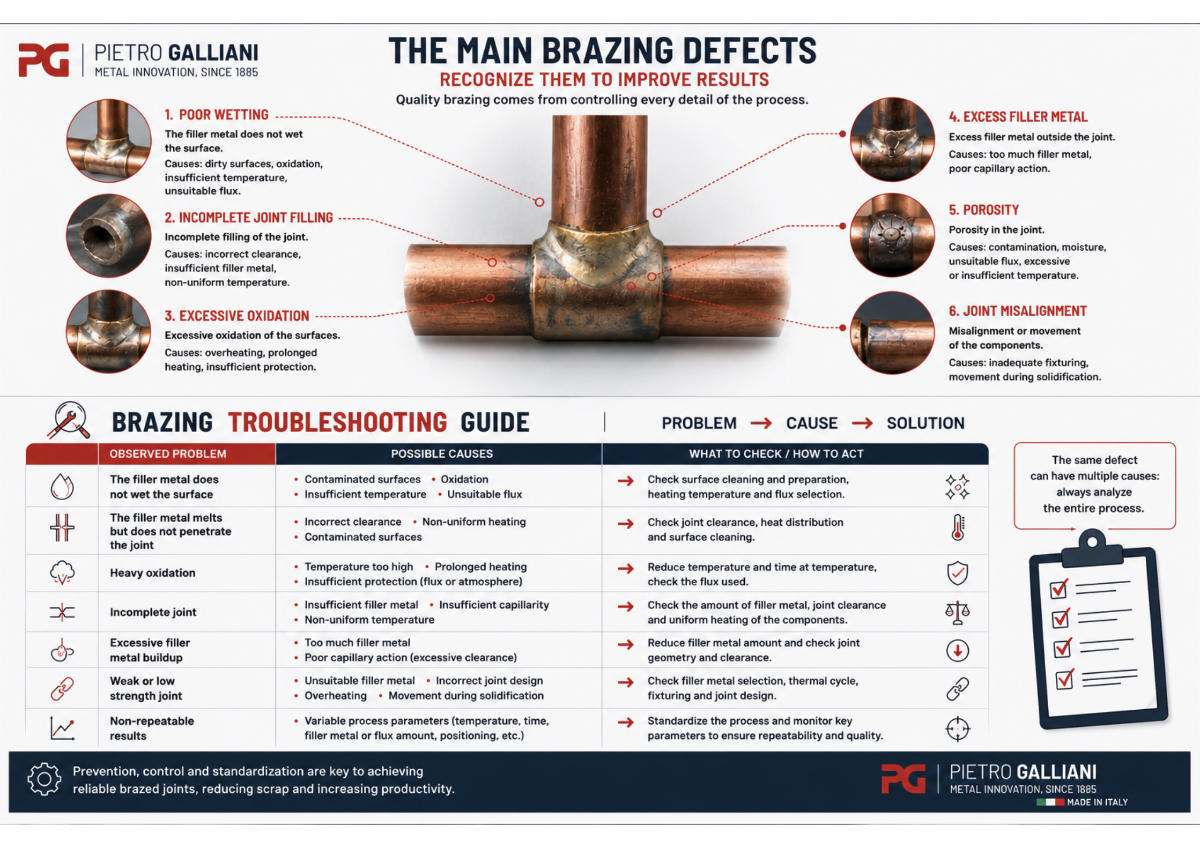
When one of these elements is not properly controlled, defects such as poor wetting, porosity, incomplete filler metal penetration, oxidation or reduced joint strength may occur.
Identifying the type of defect and understanding its possible causes is therefore the first step towards improving brazing quality and making the process more stable and repeatable.
In this article, we examine some of the most common errors in industrial brazing and the main actions that can be taken to prevent them.
1. Insufficient Surface Preparation
One of the most common brazing errors occurs even before heating begins.
The surfaces to be brazed must be clean and free from contaminants that could prevent proper wetting by the filler metal.
Oil, grease, oxides, machining residues or other contaminants can create a barrier between the base material and the brazing alloy.
Possible consequences
- Poor wetting
- Irregular filler metal distribution
- Incomplete penetration into the joint
- Discontinuities in the brazed area
- Reduced joint reliability
How to avoid it
Before brazing, surfaces should be properly prepared through degreasing, mechanical cleaning or chemical cleaning, depending on the materials and condition of the components.
Surface preparation should preferably be carried out as close as possible to the brazing operation to prevent renewed contamination or oxidation.
2. Incorrect Joint Clearance
Brazing relies on capillary action to draw the molten filler metal into the space between the components.
For this reason, the clearance between the surfaces to be joined is a critical parameter.
Excessive clearance can reduce capillary action and require a greater quantity of filler metal.
Conversely, insufficient clearance can prevent the alloy from properly penetrating the joint.
It is also important to remember that joint clearance should be evaluated at brazing temperature, taking into account the thermal expansion of the materials.
Possible consequences
- Incomplete joint filling
- Uneven distribution of the filler metal
- Reduced mechanical strength
- Greater variability between components
How to avoid it
Joint geometry should be designed taking into account:
- Base materials
- Brazing alloy
- Thermal expansion coefficients
- Process temperature
- Component geometry and dimensions
Correct joint clearance promotes uniform filler metal distribution and contributes to process repeatability.
3. Uneven Heating
One of the most common mistakes in torch brazing is concentrating the heat directly on the brazing alloy rather than heating the components to be joined uniformly.
Under correct brazing conditions, it is primarily the heat stored in the base materials that causes the filler metal to melt and flow.
When the two components have different masses or thermal conductivities, correct heat management becomes even more important.
Possible consequences
- Irregular melting of the filler metal
- Poor penetration
- Local overheating
- Increased oxidation
- Uneven joint quality
How to avoid it
Heat should be distributed in a controlled manner, paying particular attention to components with greater mass or higher heat dissipation.
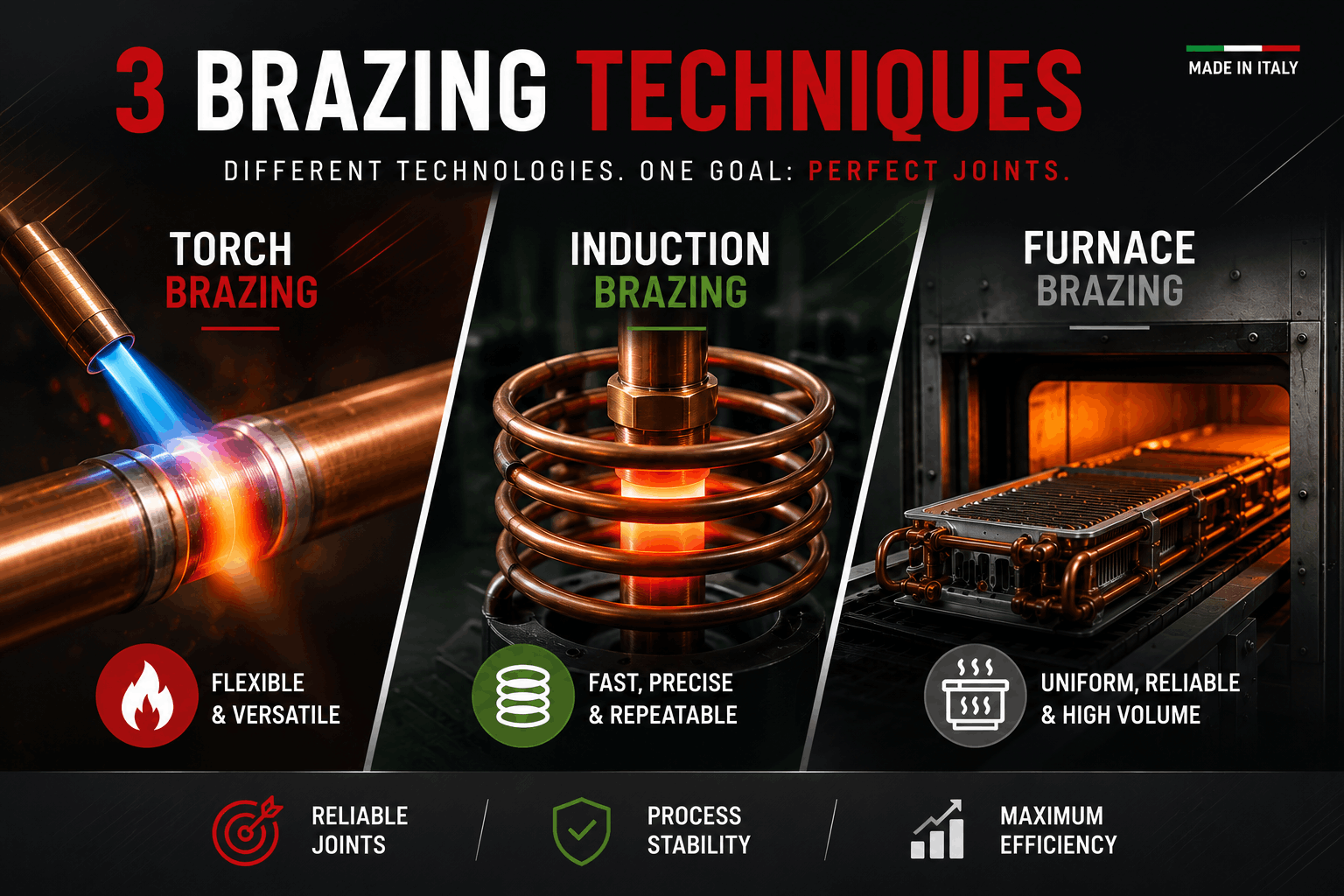
In automated processes, precise control of the thermal cycle through induction or furnace brazing can significantly improve repeatability.
4. Overheating the Joint
Increasing the temperature excessively does not improve brazing.
On the contrary, overheating can alter the behaviour of the brazing alloy, increase oxidation of the materials and compromise the effectiveness of the flux.
Each alloy has its own melting range and recommended brazing temperature.
Possible consequences
- Severe surface oxidation
- Flux degradation
- Changes in filler metal flow behaviour
- Poorer joint appearance
- Possible deterioration of the base material properties
How to avoid it
It is important to operate within the recommended temperature range for the alloy being used and to limit the time spent at elevated temperatures.
The principle should be to use only the heat required to achieve proper filler metal flow while avoiding excessive heat input.
5. Insufficient Temperature
The opposite problem can also compromise the result.
If the joint does not reach an adequate temperature, the alloy may begin to melt without reaching the conditions required for proper wetting and capillary flow.
Possible consequences
- Filler metal remaining concentrated around the application area
- Poor wetting
- Incomplete penetration
- Irregular joint formation
- Insufficient mechanical strength
How to avoid it
Before fully feeding the brazing alloy into the joint, make sure that the components have reached an adequate and sufficiently uniform temperature.
6. Incorrect Selection of the Brazing Alloy
Not all brazing alloys are suitable for every material or process.
Selection should take into account:
- Base materials
- Brazing temperature
- Component operating conditions
- Mechanical stresses
- Heating technique
- Joint geometry
For example, silver-based brazing alloys provide excellent versatility and wetting characteristics on a wide range of materials, while CuP and CuPAg alloys are extensively used for brazing copper, particularly in HVAC and refrigeration applications
Possible consequences of incorrect alloy selection
- Poor wetting
- Unsuitable process temperature
- Brittle joints
- Processing difficulties
- Insufficient performance under operating conditions
How to avoid it
The brazing alloy should be selected according to the application rather than simply on the basis of melting temperature or cost.
The least expensive material solution is not necessarily the most efficient when the entire manufacturing process is considered.
7. Incorrect Use of Brazing Flux
Brazing flux removes oxides from the surfaces and protects them against renewed oxidation during heating, helping the brazing alloy to wet the surfaces correctly.
Insufficient flux, a flux unsuitable for the process temperature or uneven application can compromise the result.
Prolonged overheating can also reduce its effectiveness.
Possible consequences
- Surface oxidation
- Poor filler metal flow
- Insufficient wetting
- Irregular joints
- Residues that are difficult to remove
How to avoid it
The flux should be:
- Compatible with the materials
- Suitable for the brazing alloy
- Effective within the process temperature range
- Applied in the correct quantity and position
It should also be remembered that certain CuP alloys used for copper-to-copper joints can provide a self-fluxing action due to the presence of phosphorus and, under these conditions, generally do not require additional flux.
8. Incorrect Amount of Brazing Alloy
Using a large quantity of filler metal does not necessarily produce a stronger joint.
In a correctly designed brazed joint, the filler metal should penetrate and distribute itself within the clearance between the components.
Excess filler metal can increase costs and create external build-up without providing any real improvement in joint strength.
Too little filler metal, on the other hand, can result in incomplete joint filling.
How to avoid it
The amount of brazing alloy should be determined according to:
- Brazed surface area
- Joint geometry
- Clearance between the components
- Filler metal feeding method
In automated production, the use of brazing rings, preforms or predetermined quantities of filler metal can significantly improve process repeatability.
9. Component Movement During Solidification
Once the filler metal has filled the joint, the components should remain correctly positioned until complete solidification.
Movement or vibration during this phase can interfere with proper joint formation.
Possible consequences
- Discontinuities
- Uneven joint formation
- Reduced strength
- Dimensional or alignment problems
How to avoid it
Appropriate positioning or fixturing systems should be used, and the assembly should not be moved until the filler metal has solidified.
10. Lack of Process Control
In industrial production, achieving one good brazed joint is not enough.
The objective must be to achieve the same level of quality consistently and repeatably.
Apparently minor variations – such as heating time, torch position, amount of flux or quantity of filler metal – can generate significant differences between components.
How to avoid it
Whenever possible, the following should be standardised:
- Surface preparation
- Joint clearance and component positioning
- Quantity of brazing alloy
- Quantity and application method of the flux
- Thermal cycle
- Heating time
- Cooling method
- Final inspection
Automating certain stages of the process can also help reduce operator-related variability.
Quick Guide to Diagnosing Common Brazing Defects
Observed problem | Possible causes | What to check |
Filler metal does not wet the surface | Contaminated surface, oxidation, insufficient temperature, unsuitable flux | Cleaning, temperature and flux selection |
Filler metal melts but does not penetrate the joint | Incorrect clearance, uneven heating, contaminated surfaces | Joint geometry and heat distribution |
Severe oxidation | Excessive temperature, prolonged heating, insufficient protection | Thermal cycle and flux |
Incomplete joint | Insufficient filler metal, poor capillary action, uneven temperature | Filler metal quantity, clearance and heating |
Excess filler metal build-up | Excessive filler metal or poor capillary action | Filler metal dosage and joint geometry |
Brittle or weak joint | Unsuitable alloy, incorrect geometry, overheating or movement during solidification | Alloy, process and joint design |
Inconsistent results | Variable process parameters | Process standardisation and control |
Note: the same defect can have several possible causes. Troubleshooting should therefore consider the entire process rather than focusing on a single parameter.
Preventing Defects Means Controlling the Entire Process
Brazing quality does not depend on a single factor.
A reliable joint results from the correct combination of:
Surface preparation ↓ Joint design ↓ Brazing alloy selection ↓ Flux selection and application ↓ Heating control ↓ Correct filler metal feeding ↓ Cooling and final inspection
Standardising these stages is particularly important in industrial processes, where quality and repeatability must be guaranteed across thousands of components.
Conclusion
Many brazing defects are not caused by a single error, but by the interaction between base materials, brazing alloy, flux, joint geometry and thermal cycle.
Identifying the actual root cause of a problem is therefore essential before making changes to the process.
Proper surface preparation, correct joint clearance, appropriate selection of brazing alloy and flux, and accurate heating control can significantly reduce the risk of defects and create a more stable and repeatable process.
In industrial production, this means not only improving joint quality but also reducing rework and scrap, increasing productivity and improving the reliability of the finished component.
Pietro Galliani Brazing Solutions
Correct selection of brazing materials is a fundamental part of the process.
Pietro Galliani offers a complete range of solutions for different industrial applications:
- Silver-based brazing alloys
- Copper-phosphorus (CuP) alloys
- Copper-phosphorus-silver (CuPAg) alloys
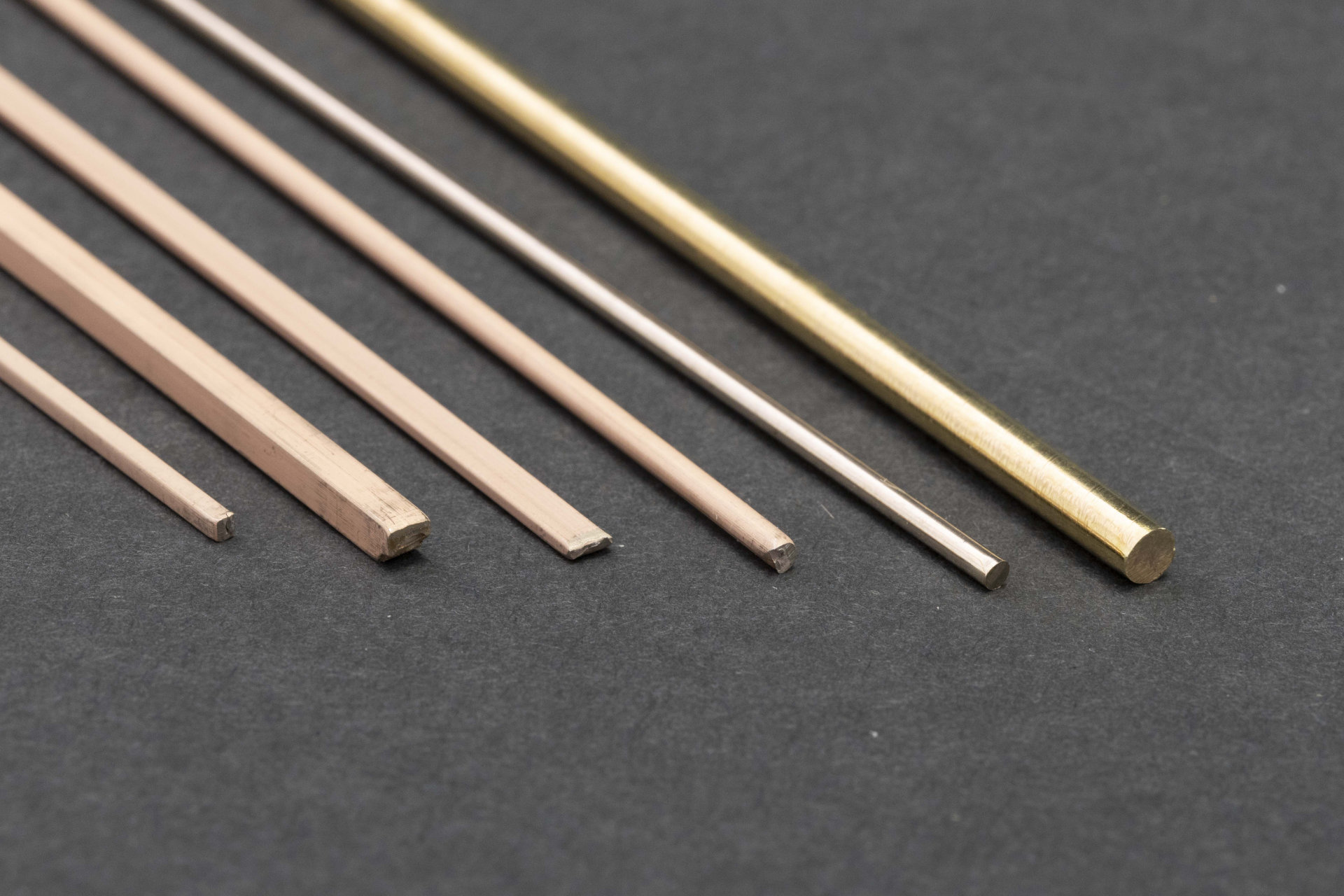
- Brazing alloys available in different forms
- GALFLO brazing fluxes, developed for different process requirements
- GALFLO Eco Green, developed to combine high brazing performance with a formulation designed with greater attention to safety and sustainability
Selecting the most appropriate combination of alloy, product form and flux can help improve joint quality and the stability of the entire production process.