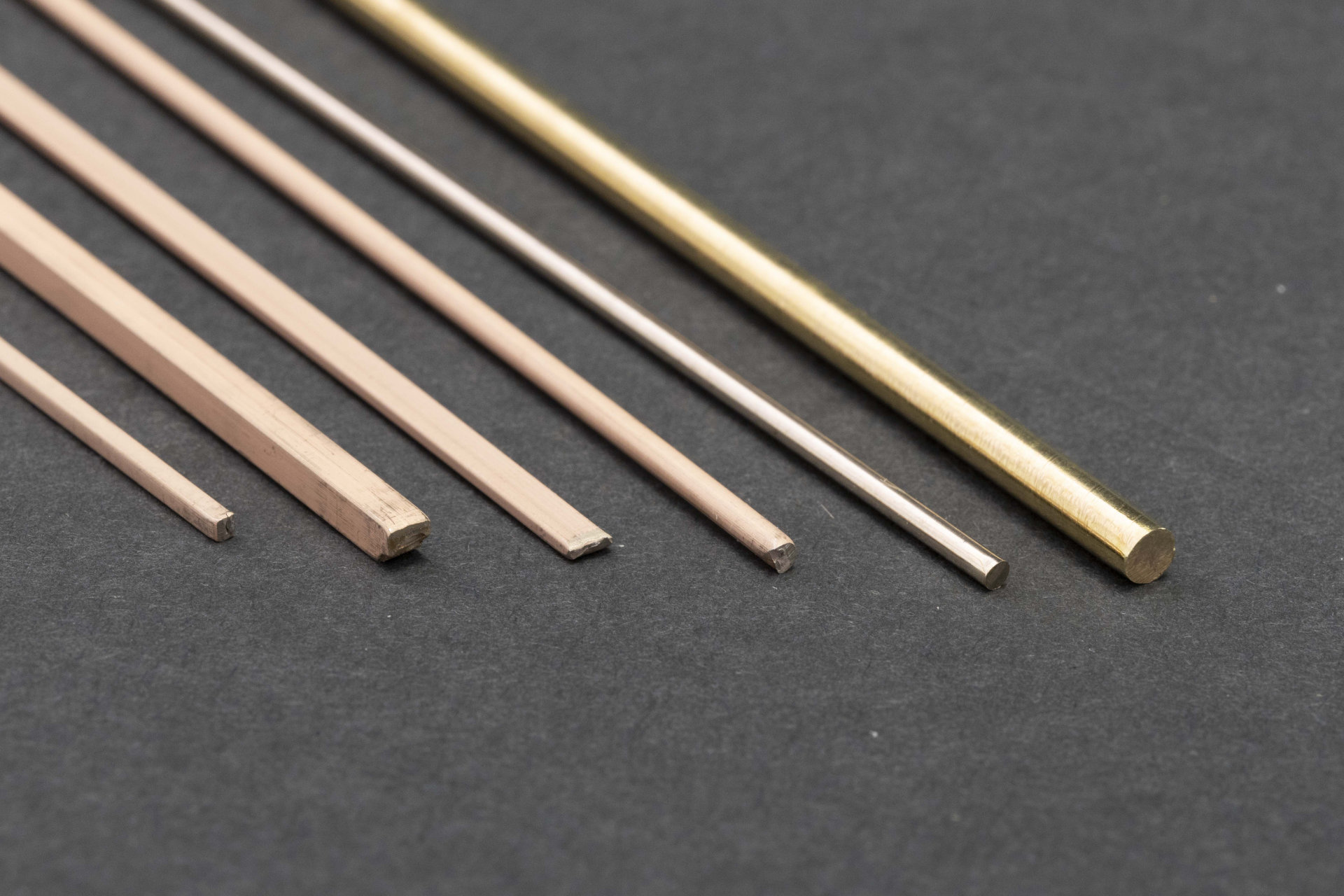
Copper-phosphorus (CuP) and copper-phosphorus-silver (CuPAg) alloys are among the most widely used solutions in the brazing of copper and copper alloy components, thanks to their combination of efficiency, ease of use and reliability.
These alloys are extensively used in industrial applications such as HVAC systems, refrigeration, heat exchangers and piping, where strong, leak-tight and durable joints are required.
Although they belong to the same alloy family, CuP and CuPAg alloys have different characteristics that affect joint performance, mechanical behavior and application range.
In this article we analyze their properties, advantages and selection criteria in detail.
What Are CuP and CuPAg Alloys?
CuP alloys are brazing alloys mainly composed of:
- copper (Cu)
- phosphorus (P)
In addition, CuPSn alloys (such as CuPSn7) are also available, where tin is added in addition to copper and phosphorus. These alloys are mainly used when a “softer”, more controllable brazing process is required, with improved flow characteristics compared to standard CuP alloys.
CuPAg alloys contain:
- copper (Cu)
- phosphorus (P)
- silver (Ag)
The addition of silver significantly changes the behavior of the alloy, improving several mechanical and operational properties.
The Role of Phosphorus in Brazing Alloys
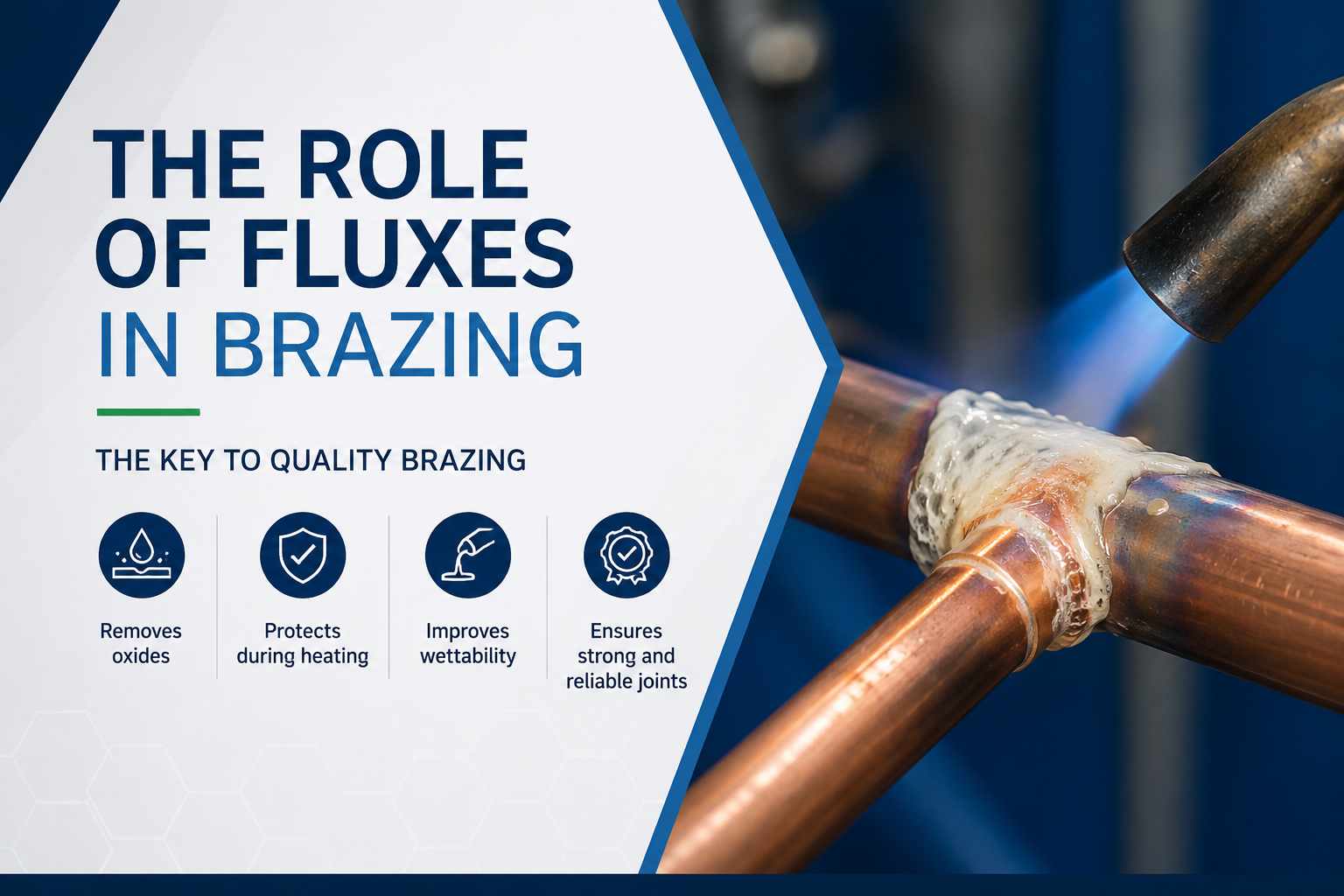
In CuP alloys, phosphorus plays a fundamental role as a deoxidizing element during the brazing process.
In copper-to-copper applications, this allows brazing without additional fluxes or deoxidizers, simplifying the process and reducing operational costs.
However, phosphorus also has some limitations:
- it reduces joint ductility
- it may promote the formation of brittle phases
- it makes the alloy unsuitable for steel or nickel alloy brazing
For this reason, proper alloy selection according to materials and operating conditions is essential.
CuP Alloys: Simplicity and Efficiency
Copper-phosphorus alloys are among the most widely used alloys for copper brazing due to their practicality and cost efficiency.
Main Advantages
Self-fluxing on copper
In copper-to-copper brazing, they generally do not require additional fluxes or deoxidizers.
This provides several advantages:
- simplified process
- reduced post-brazing residues
- lower operating costs
Good fluidity and capillary action
CuP alloys provide good capillary flow, allowing the molten alloy to penetrate the joint efficiently.
Cost-effectiveness
Compared to other brazing alloys, CuP alloys are a particularly competitive solution from a cost perspective.
Limitations of CuP Alloys
Despite their advantages, CuP alloys also have important technical limitations.
Not suitable for steels and ferrous materials
Phosphorus reacts negatively with iron and nickel, forming brittle compounds that compromise joint quality.
For this reason, CuP alloys should not be used on:
- steel
- stainless steel
- nickel alloys
Limited ductility
Joints made with CuP alloys are generally less ductile than those produced with silver-containing alloys.
In applications involving:
- vibrations
- thermal cycles
- mechanical stress
CuPAg alloys may be preferable.
Typical Applications of CuP Alloys
Copper-phosphorus alloys are mainly used in:
- HVAC systems
- refrigeration
- copper piping
- heat exchangers
- industrial plumbing systems
They are particularly suitable when:
- copper-to-copper joints are involved
- the joint is not subject to severe vibrations
- process cost is an important factor
CuPAg Alloys: Improved Performance and Greater Reliability
Copper-phosphorus-silver alloys represent an evolution of traditional CuP alloys.
The addition of silver significantly improves:
- ductility
- mechanical strength
- in-service performance
This makes CuPAg alloys particularly suitable for more demanding applications.
Advantages of CuPAg Alloys
Greater joint ductility
Silver enables the creation of less brittle joints with higher resistance to mechanical stress.
This is especially important in the presence of:
- vibrations
- thermal shock
- pressure fluctuations
Improved fatigue resistance
CuPAg alloys offer better performance in applications exposed to repeated thermal cycles or dynamic loads.
Better fluidity
The addition of silver also improves wetting and alloy distribution within the joint.
When to Choose CuPAg Alloys
CuPAg alloys are often preferred when:
- the joint is exposed to vibrations
- high mechanical performance is required
- the component operates under severe conditions
- long-term reliability is essential
Typical Applications of CuPAg Alloys
Copper-phosphorus-silver alloys are widely used in:
- high-performance HVAC systems
- refrigeration systems
- compressors
- components exposed to thermal cycling
- highly reliable heat exchangers
They are especially common in industries where reliability and durability are critical requirements.
CuP or CuPAg: Which One Should You Choose?
The selection mainly depends on:
- base materials
- operating conditions
- required performance
- available budget
In general:
| Characteristic | CuP | CuPAg |
| Cost | Lower | Higher |
| Ductility | Limited | Improved |
| Vibration resistance | Medium | High |
| Fluidity | Good | Very good |
| Severe applications | Limited | Ideal |
CuP alloys represent an efficient and economical solution for standard copper applications, while CuPAg alloys provide superior performance in more demanding applications.
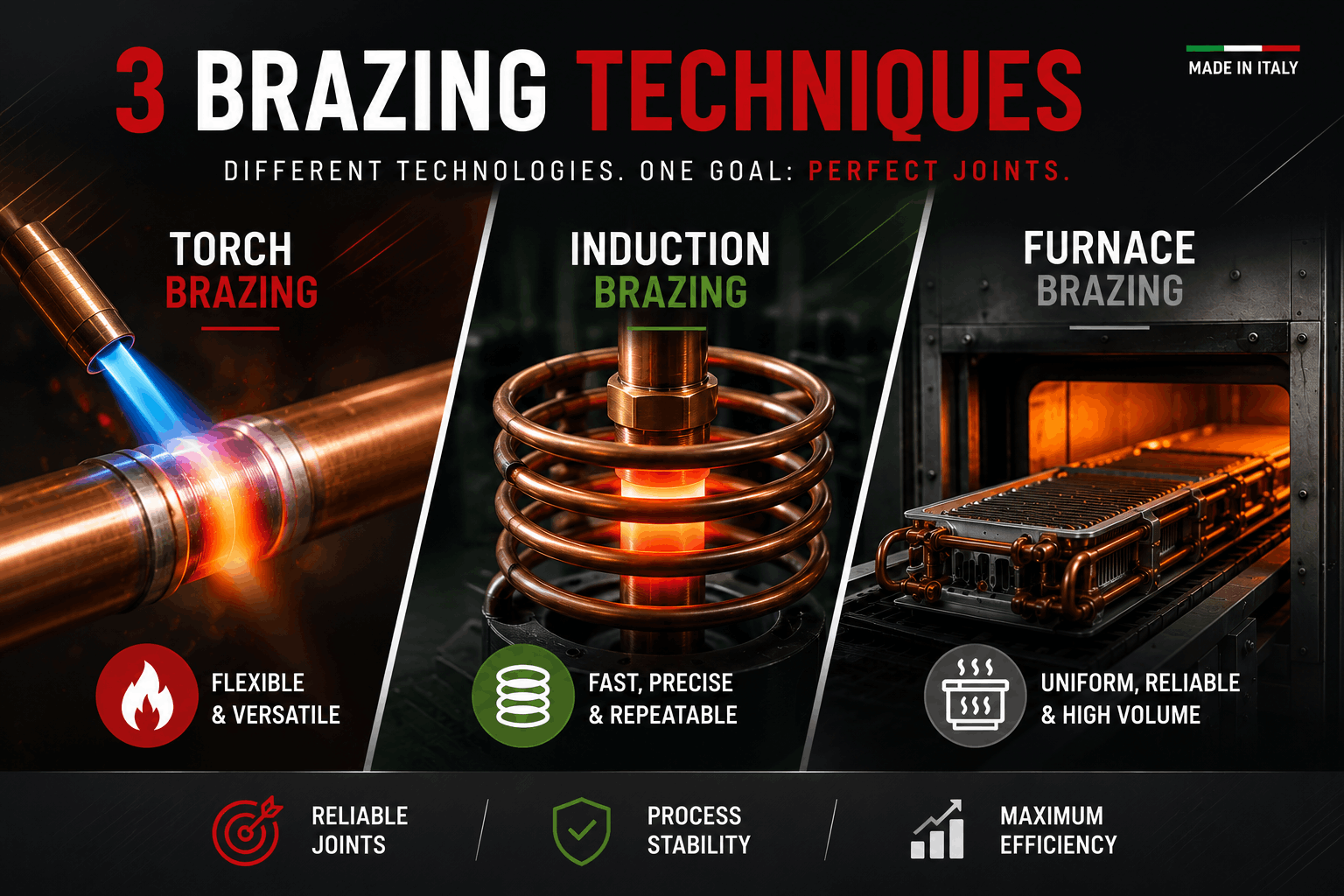
The Role of the Brazing Process
The brazing process also affects alloy behavior.
Torch brazing
Widely used in HVAC systems and piping.
Induction brazing
Provides high precision and repeatability.
Furnace brazing
Suitable for mass production and controlled processes.
The correct combination of:
- brazing alloy
- joint geometry
- temperature
- heating method
is essential to achieve reliable results.
Conclusion
Copper-phosphorus and copper-phosphorus-silver alloys represent two key solutions in industrial brazing.
CuP alloys provide simplicity, speed and cost efficiency in copper-to-copper brazing, while CuPAg alloys offer superior ductility, reliability and resistance to mechanical stress.
The correct alloy selection helps optimize:
- joint quality
- production efficiency
- component lifetime
- process reliability
To achieve the best results, materials, operating conditions and application requirements must be carefully evaluated.