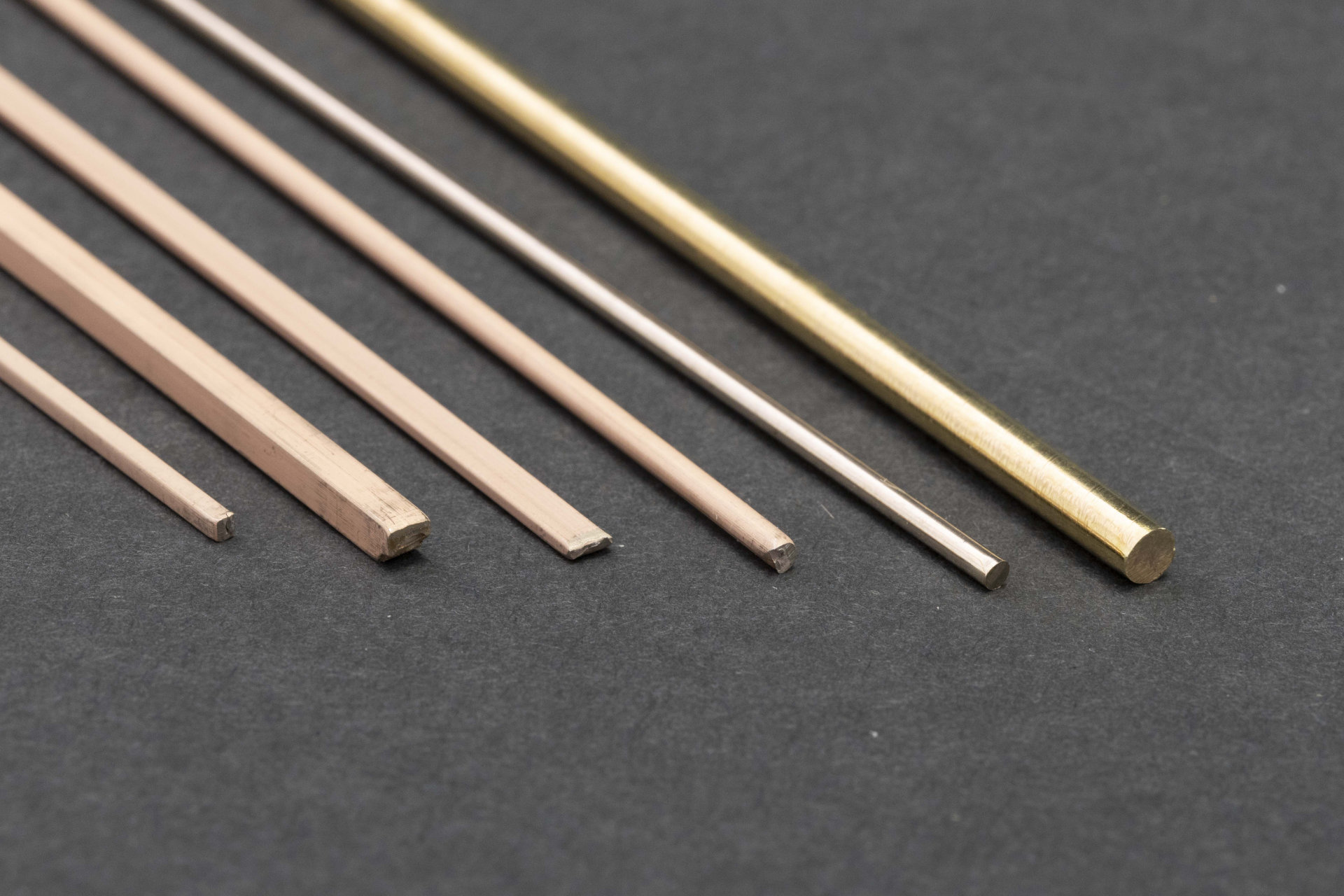
The selection of brazing alloys is one of the most critical aspects of the brazing process, as it directly affects joint quality, mechanical strength, long-term reliability and process stability.
An incorrect selection can lead to defects such as poor wetting, brittle joints, porosity or leakage issues. On the contrary, a proper choice allows optimization not only of joint performance, but also of overall process efficiency.
The selection of the brazing alloy must be carried out by considering base materials, operating conditions and process technology in an integrated way.
Key Factors in Selecting Brazing Alloys
To identify the most suitable alloy, it is necessary to evaluate:
Materials to be joined
Metallurgical compatibility is the primary selection criterion. Some alloys show excellent wetting on copper but are ineffective on steels or nickel alloys.
Operating temperature
The joint must maintain its mechanical properties at working temperature. Therefore, the alloy must have a melting point and resistance suitable for operating conditions.
Mechanical stresses
Vibrations, thermal shocks and operating cycles influence alloy selection, favoring more ductile and fatigue-resistant solutions.
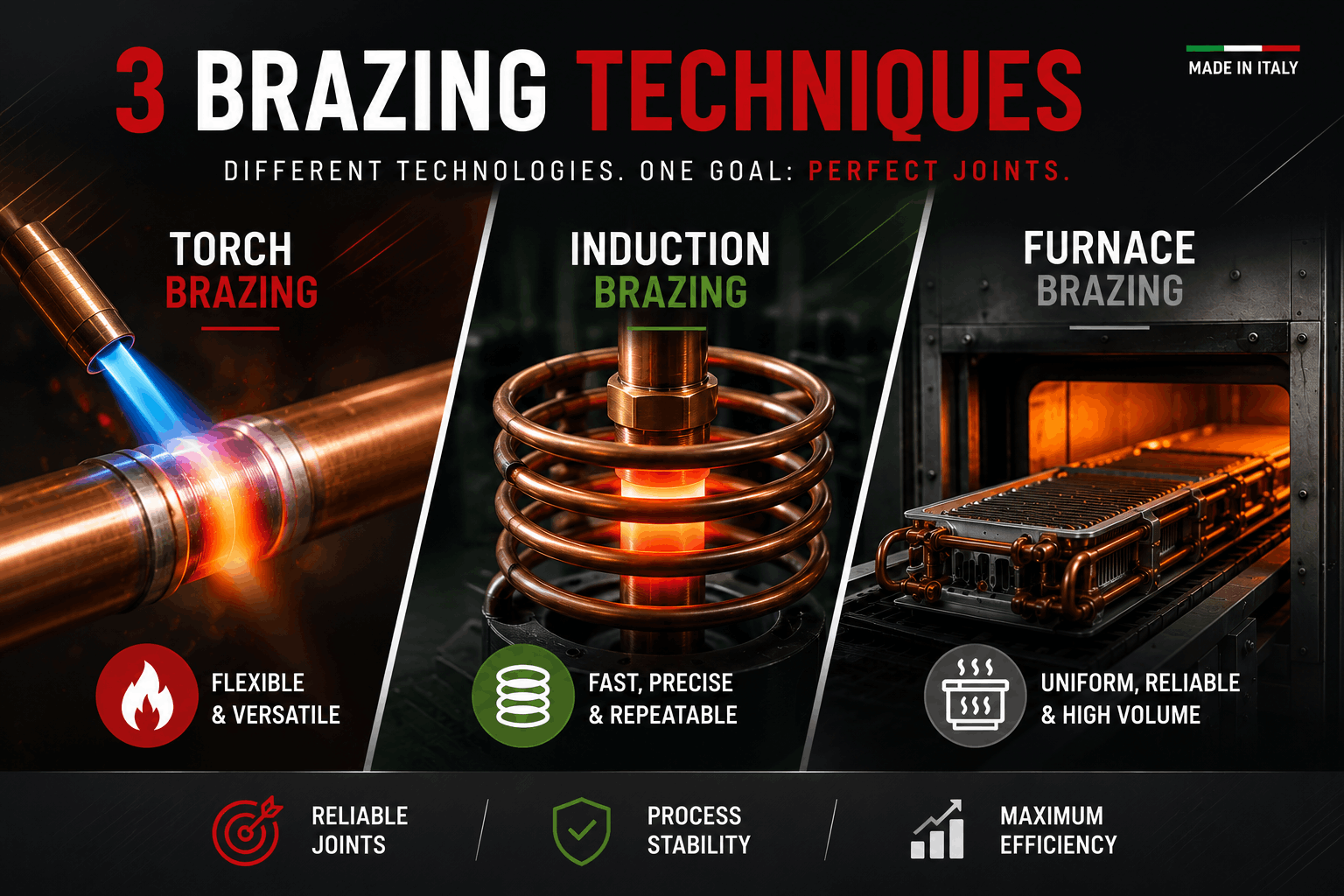
Brazing process
- torch → greater flexibility
- induction → precision and localized heating
- furnace → high repeatability and mass production
Process atmosphere
Brazing in air, controlled atmosphere or vacuum requires alloys with different behaviors.
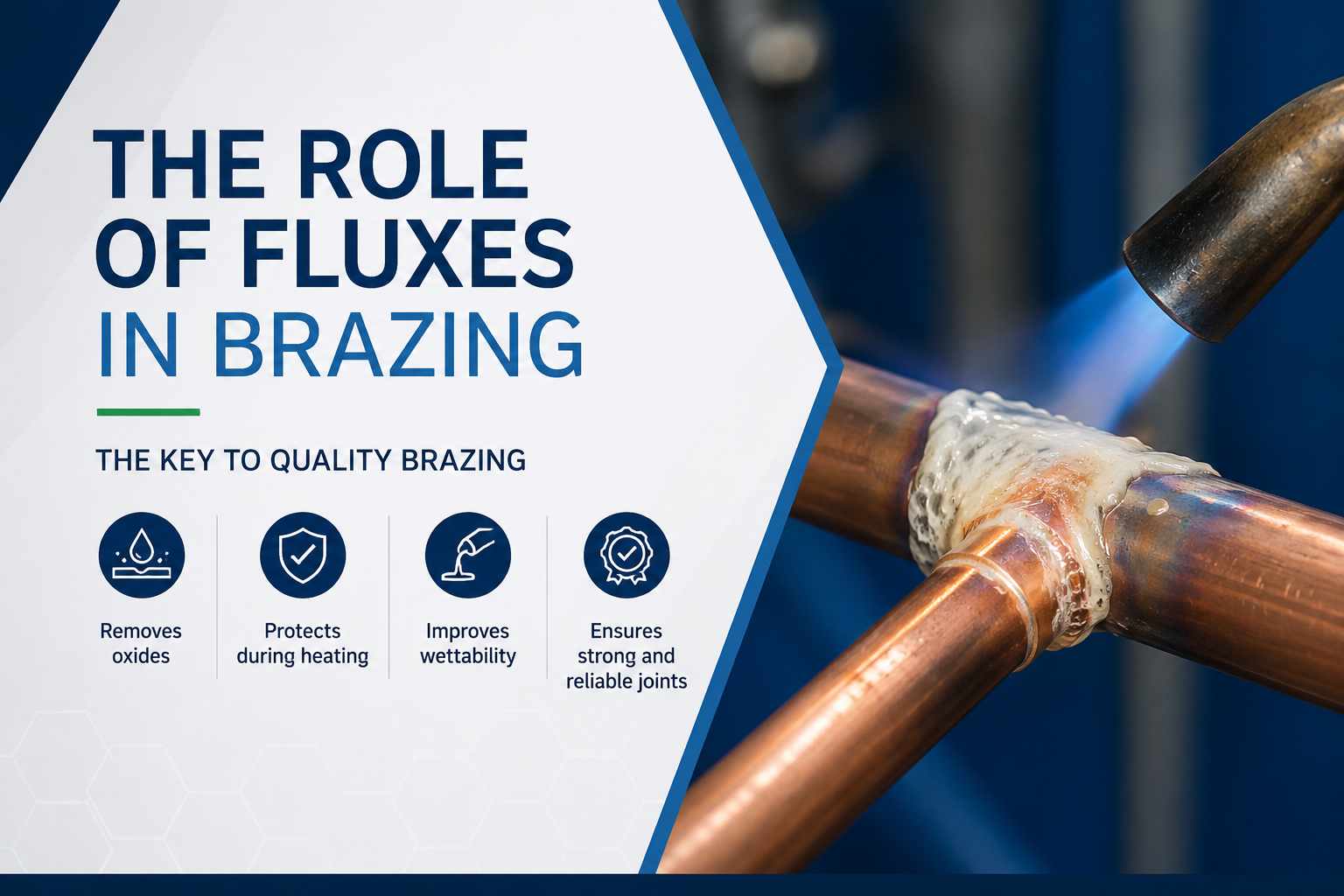
Use of fluxes for brazing
Some alloys (e.g. CuP on copper) can be self-fluxing, while others necessarily require the use of fluxes.
Silver-Based Alloys: Maximum Versatility and Reliability
Silver-based alloys represent the most versatile solution in brazing and are used when high performance and maximum joint reliability are required.
Composition and characteristics
These alloys contain variable percentages of silver, often combined with copper, zinc and other elements.
Main properties include:
excellent wetting on a wide range of materials
- relatively low melting temperatures (compared to other brazing alloys)
high mechanical strength
good ductility, allowing absorption of vibrations and stresses
- excellent capillary action
Operational advantages
- ease of use even on complex joints
- excellent long-term reliability
- compatibility with different materials, including steels and stainless steels
Limitations
- higher cost compared to other alloys
need for fluxes for brazing
Typical applications
- steel and stainless steel
- copper and brass
- high-performance HVAC components
- electrical contacts
- critical or high-reliability applications
👉 In general, silver-based alloys are the preferred choice when joint quality is the main requirement.
CuP Alloys (Copper-Phosphorus): Efficiency and Simplicity on Copper
CuP alloys (copper-phosphorus) are among the most widely used for brazing copper components, especially in high-volume industrial applications.
Composition and behavior
These alloys contain copper and phosphorus, where phosphorus plays a key role as a deoxidizing agent.
Main advantages
self-fluxing on copper-to-copper joints (no flux required)
- good fluidity and capillary action
- simple and fast process
cost-effective
Technical limitations
- not suitable for steel or ferrous materials
- possible formation of brittle phases
- lower ductility compared to silver-containing alloys
Typical applications
- copper piping
- HVAC systems
- heat exchangers
- refrigeration systems
👉 CuP alloys are ideal for copper-to-copper applications, with a focus on efficiency and cost.
CuPAg Alloys (Copper-Phosphorus-Silver): Improved Performance
CuPAg alloys are an evolution of CuP alloys, where the addition of silver significantly improves joint properties.
Main characteristics
higher ductility compared to CuP
- improved resistance to vibrations and stresses
- greater reliability in critical joints
- good wetting
Advantages compared to CuP
- reduced joint brittleness
- better performance under thermal cycling
- improved operational safety
Typical applications
- HVAC systems subject to vibrations
- refrigeration systems
- components exposed to thermal and mechanical stress
👉 CuPAg alloys represent an optimal compromise between cost and performance, widely used in industrial applications.
The Role of the Process in Alloy Selection
The brazing technology directly influences alloy selection:
torch brazing greater operational tolerance, suitable for versatile alloys
induction brazing requires alloys with precise and controlled behavior
furnace brazing requires stable alloys compatible with controlled atmospheres
The correct combination of alloy and process is essential to ensure consistent results.
The Role of Fluxes in Brazing
Fluxes for brazing are essential to:
- remove surface oxides
- protect the joint during heating
- improve wetting of the alloy
They are essential for:
- silver-based alloys
- brazing on steels
They are generally not required for CuP alloys on copper.
Conclusion
The selection of brazing alloys must be carefully carried out by considering materials, process and operating conditions.
Silver-based alloys offer the best performance and maximum versatility
CuP alloys represent an efficient and cost-effective solution for copper
CuPAg alloys provide an ideal balance between cost and reliability
A proper selection significantly improves joint quality, process stability and component lifetime.