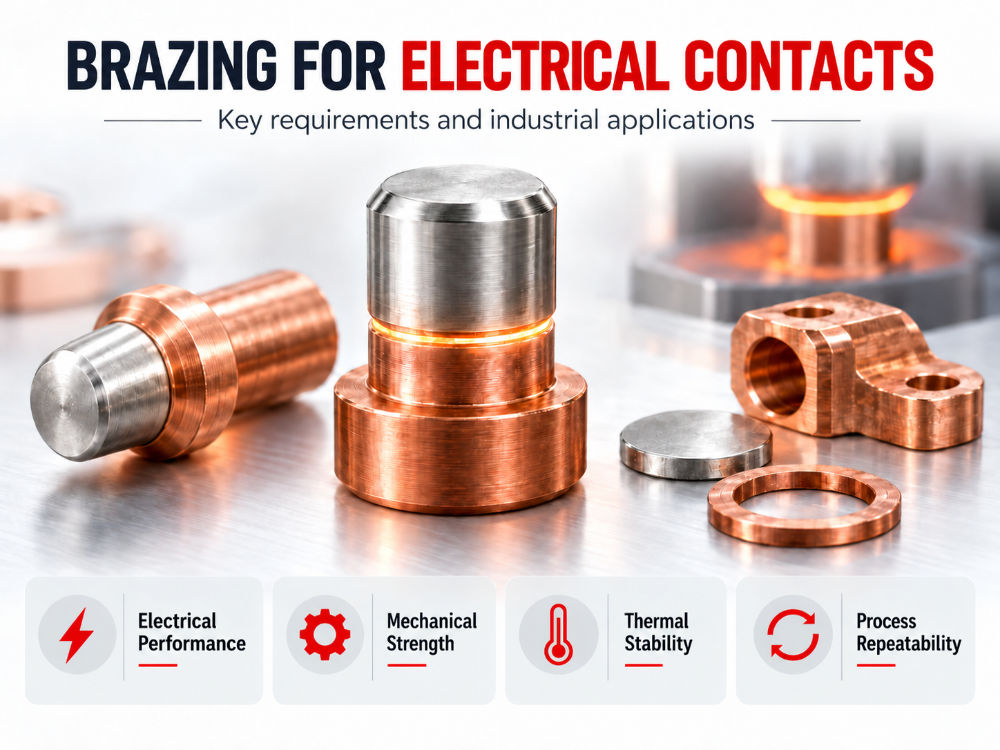
Brazing is a permanent metal joining process widely used in industrial applications to assemble components in a reliable, repeatable and controlled way. Thanks to its versatility and limited thermal impact on base materials, brazing is extensively applied in sectors such as HVAC, electrical contacts, heat exchangers, automotive and electromechanical manufacturing
In this article we explain what brazing is, how it works from a metallurgical standpoint, how it differs from welding, and the key role played by brazing alloys and fluxes for brazing.
Technical Definition of Brazing
Brazing is a metal joining process in which two or more components are joined by means of a brazing alloy that melts at a temperature lower than that of the base materials.
Unlike welding, the base metals do not melt. Instead, the molten filler metal flows into the joint through capillary action, bonding the components together once it solidifies. The strength of the joint derives from metallurgical interaction between the filler alloy and the base materials, as well as from proper joint design.
In general, a process is defined as brazing when:
- The filler metal has a melting temperature lower than that of the base materials
- The base materials remain in the solid state
- The joint is formed through wetting and capillary action
The Principle of Capillary Action
Capillary action is fundamental in brazing.
When properly heated, the molten brazing alloy is drawn into the joint gap between the components, provided that:
- The joint clearance is correctly designed
- The surfaces are clean and free of oxides
- A suitable flux for brazing is used when brazing in air
Correct joint design is essential. If the clearance is too large, capillary action is reduced; if it is too tight, alloy flow may be hindered. Proper control of these parameters ensures uniform distribution of the filler metal and optimal mechanical performance.
Soft Brazing and Hard Brazing
Brazing processes are generally classified according to working temperature.
Soft Brazing
- Process temperature typically below 450 °C
- Filler metals often based on tin
- Limited mechanical strength
- Common in electronics and light-duty assemblies
Hard Brazing (Silver or Copper Brazing)
- Process temperature above 450 °C
- Use of copper-based, silver-based or special brazing alloys
- High mechanical strength and thermal resistance
- Widely used in industrial and structural applications
In most industrial environments, hard brazing is the standard solution due to its superior performance characteristics.
Brazing vs Welding: Key Differences
Although sometimes confused, brazing and welding are fundamentally different processes.
Aspect | Brazing | Welding |
| Base materials melting | No | Yes |
| Working temperature | Lower | Higher |
| Thermal distortion | Minimal | Possible |
| Joining dissimilar metals | Easier | More complex |
| Process repeatability | High | Depends on method |
Brazing is often preferred when:
- Dissimilar materials must be joined
- Thermal distortion must be minimized
- High repeatability is required in production
Materials Commonly Joined by Brazing
Brazing is compatible with a wide range of materials, including:
- Copper and copper alloys
- Carbon steel and stainless steel
- Brass and bronze
- Nickel-based alloys
- Precious metals and specialty alloys
The correct selection of the brazing alloy depends on base materials, operating conditions and required joint performance.
The Role of Brazing Alloys
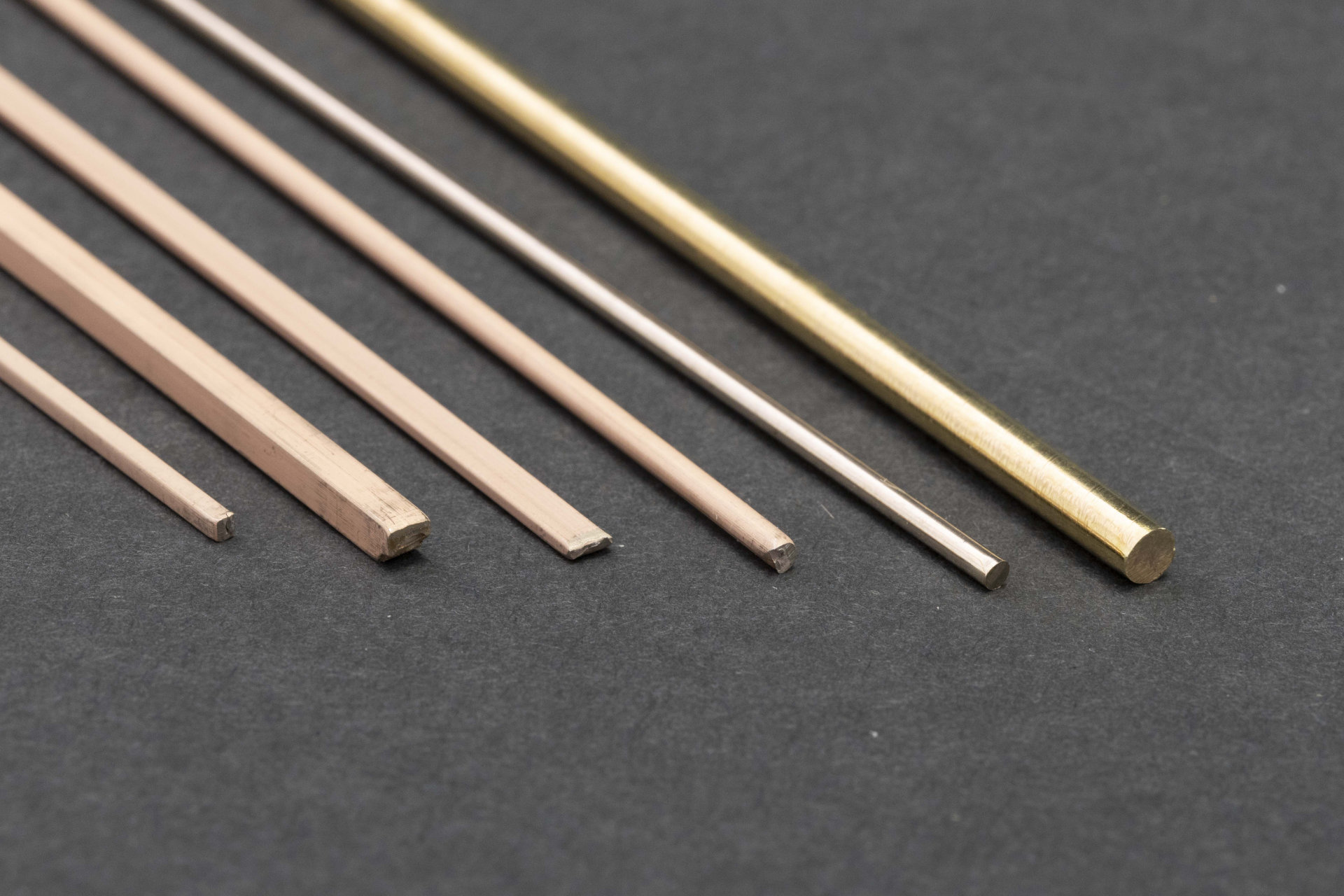
Brazing alloys are the core element of the process. Their function is to create a strong metallurgical bond between components, ensuring mechanical resistance, electrical conductivity and, in many cases, pressure tightness.
Key selection parameters include:
- Chemical composition
- Melting temperature range
- Wetting behavior on base materials
- Mechanical strength and corrosion resistance
Common alloy families include:
- Copper-phosphorus alloys
- Copper-phosphorus-silver alloys
- Silver-based brazing alloys
- Special alloys for demanding applications
Fluxes for Brazing: Why They Are Essential
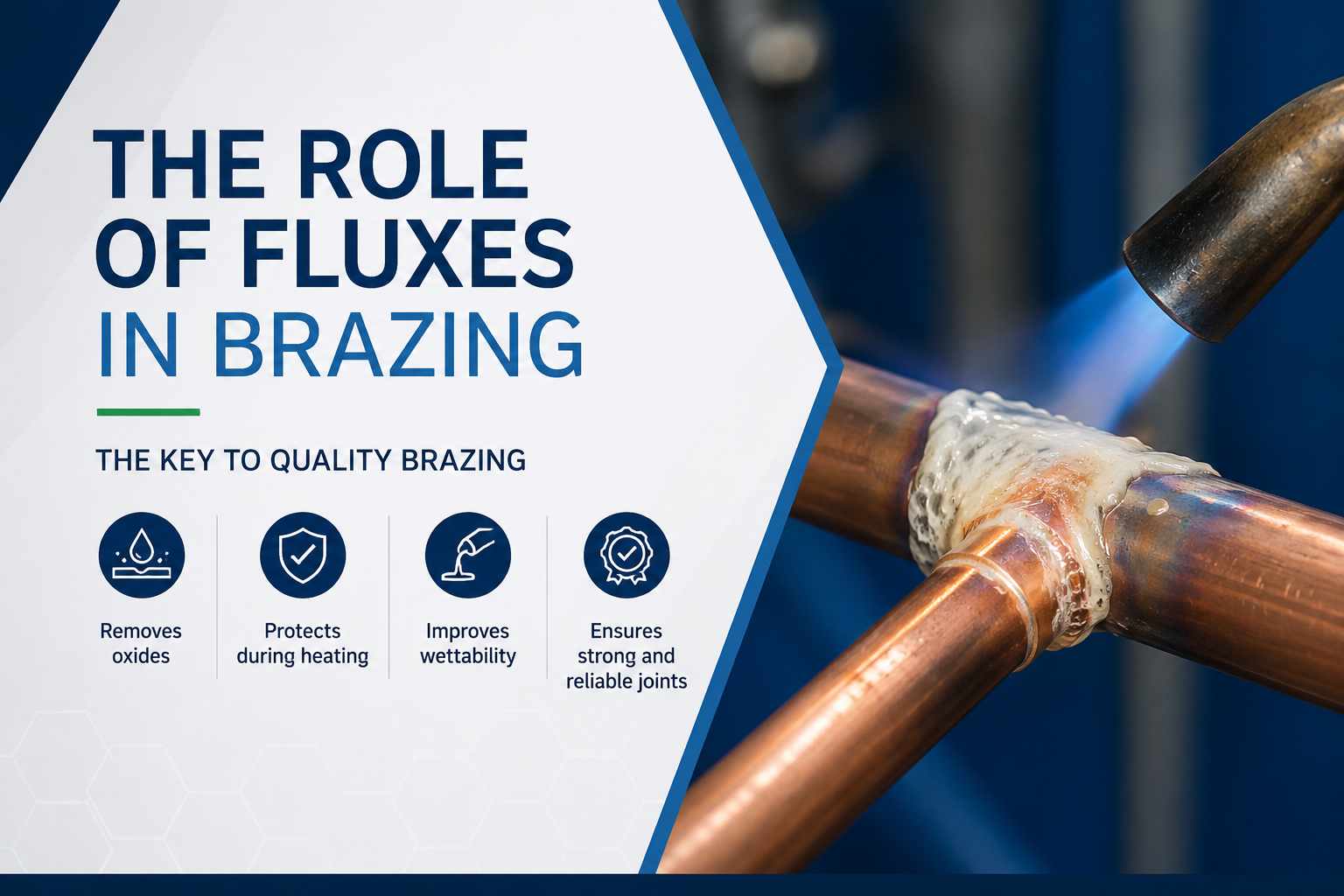
During heating, metals tend to oxidize. Surface oxides prevent proper wetting of the molten filler metal, compromising joint quality. Fluxes for brazing perform several critical functions:
- Remove existing oxides from the metal surface
- Protect surfaces from further oxidation during heating
- Improve wetting and filler metal flow
The flux must be compatible with:
- The selected brazing alloy
- The base materials
- The process temperature
An unsuitable flux can result in poor joint formation, weak bonding or excessive residues requiring additional cleaning.
Advantages of Brazing in Industrial Applications
Brazing offers several advantages in industrial production:
- High-quality, reliable joints
- Reduced thermal impact on components
- Capability to join dissimilar materials
- Excellent repeatability in automated processes
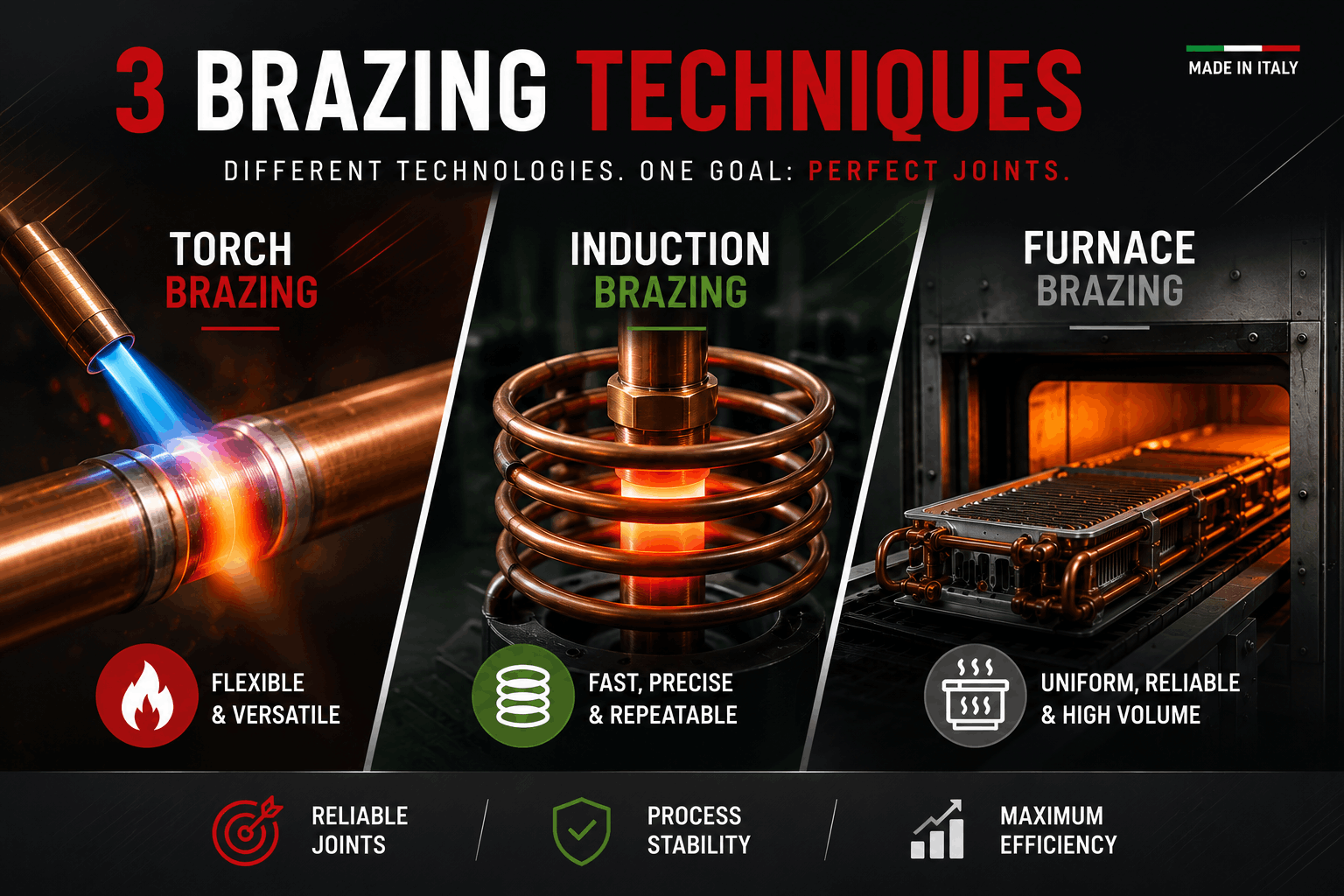
- Adaptability to torch, induction and furnace brazing
These characteristics make brazing a strategic joining technology across multiple industrial sectors.
Conclusion
Brazing is a highly reliable and versatile metal joining process that combines controlled thermal input with strong metallurgical bonding. The correct selection of brazing alloys, proper joint design and the appropriate use of fluxes for brazing are essential to achieve consistent and high-performance results.
In the following articles, we will explore brazing alloys, flux selection and industrial brazing techniques in greater technical detail, providing practical guidance for process optimization and material selection