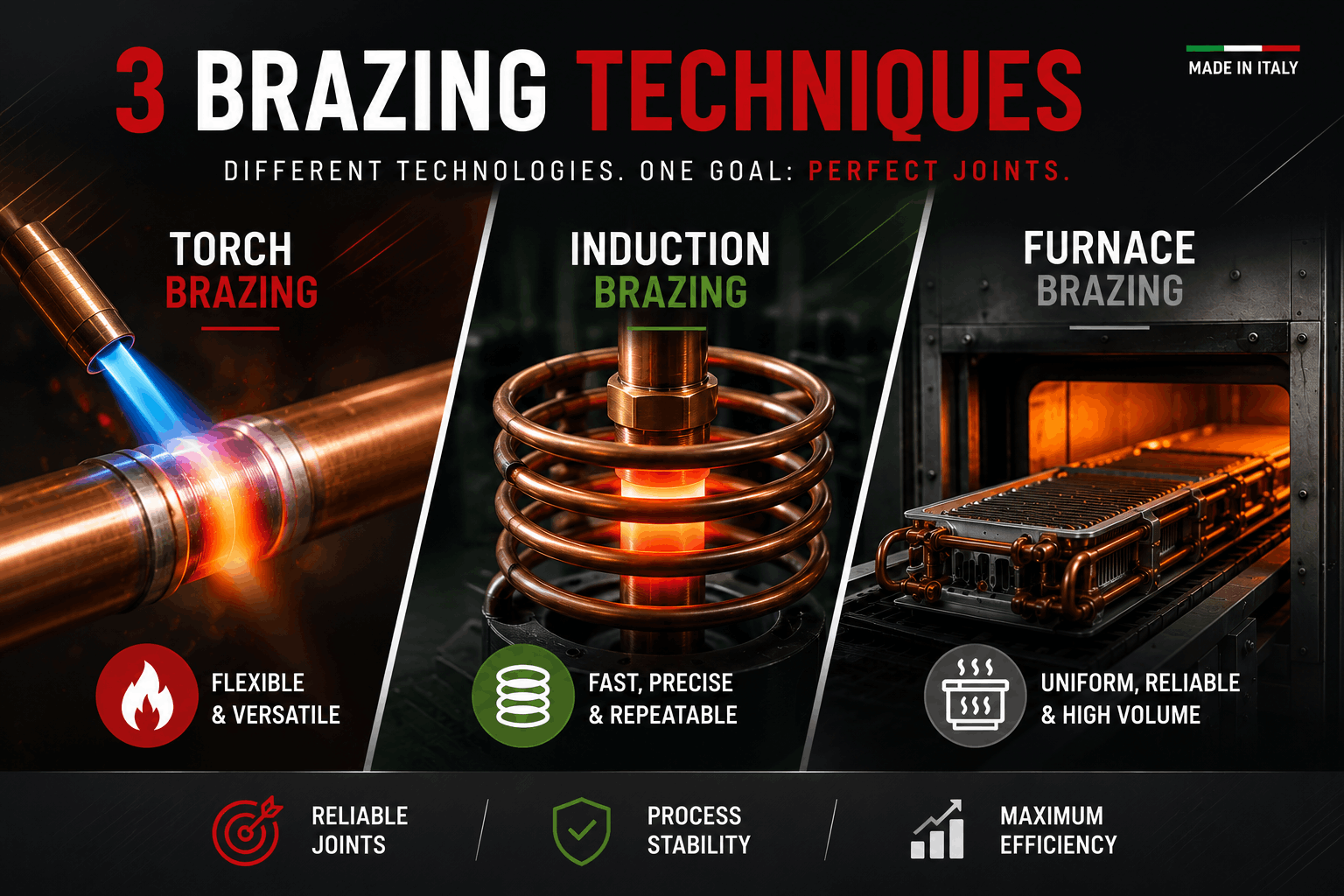
Brazing is one of the most widely used joining processes in industrial manufacturing thanks to its ability to reliably join metallic materials with relatively limited thermal impact. Within this technology, however, two main categories can be distinguished: soft brazing and hard brazing.
Understanding the differences between these two techniques is essential to select the most suitable process depending on the materials involved, the service conditions and the performance required from the joint.
In this article we analyze the main characteristics of both techniques, highlighting process temperatures, materials used, typical applications and operational limitations.
What Is Soft Brazing
Soft brazing is a joining process that uses filler metals with relatively low melting temperatures, generally below 450 °C.
During the process the filler metal melts and flows into the joint by capillary action, while the base materials remain in the solid state.
The alloys used in soft brazing are typically tin-based alloys, often combined with elements such as silver, copper or bismuth to improve specific properties.
Key Characteristics
Soft brazing presents several distinctive characteristics:
- relatively low process temperature
- limited distortion of components
- simple and easily controllable process
- good electrical conductivity of the joint
For these reasons, it is widely used in applications where high mechanical or thermal resistance is not required.
Typical Applications
Soft brazing is commonly used in:
- electronics and electrical components
- printed circuit boards
- small metal assemblies
- plumbing systems and low-temperature piping
In these applications, the priority is often precision and protection of heat-sensitive components.
Limitations of Soft Brazing
Despite its simplicity, soft brazing has some limitations:
- relatively low mechanical strength
- limited resistance to high temperatures
- lower resistance to vibration and mechanical stresses
For more demanding applications, hard brazing is generally preferred.
What Is Hard Brazing
Hard brazing uses brazing alloys with melting temperatures above 450 °C, allowing the creation of joints with significantly higher mechanical and thermal resistance.
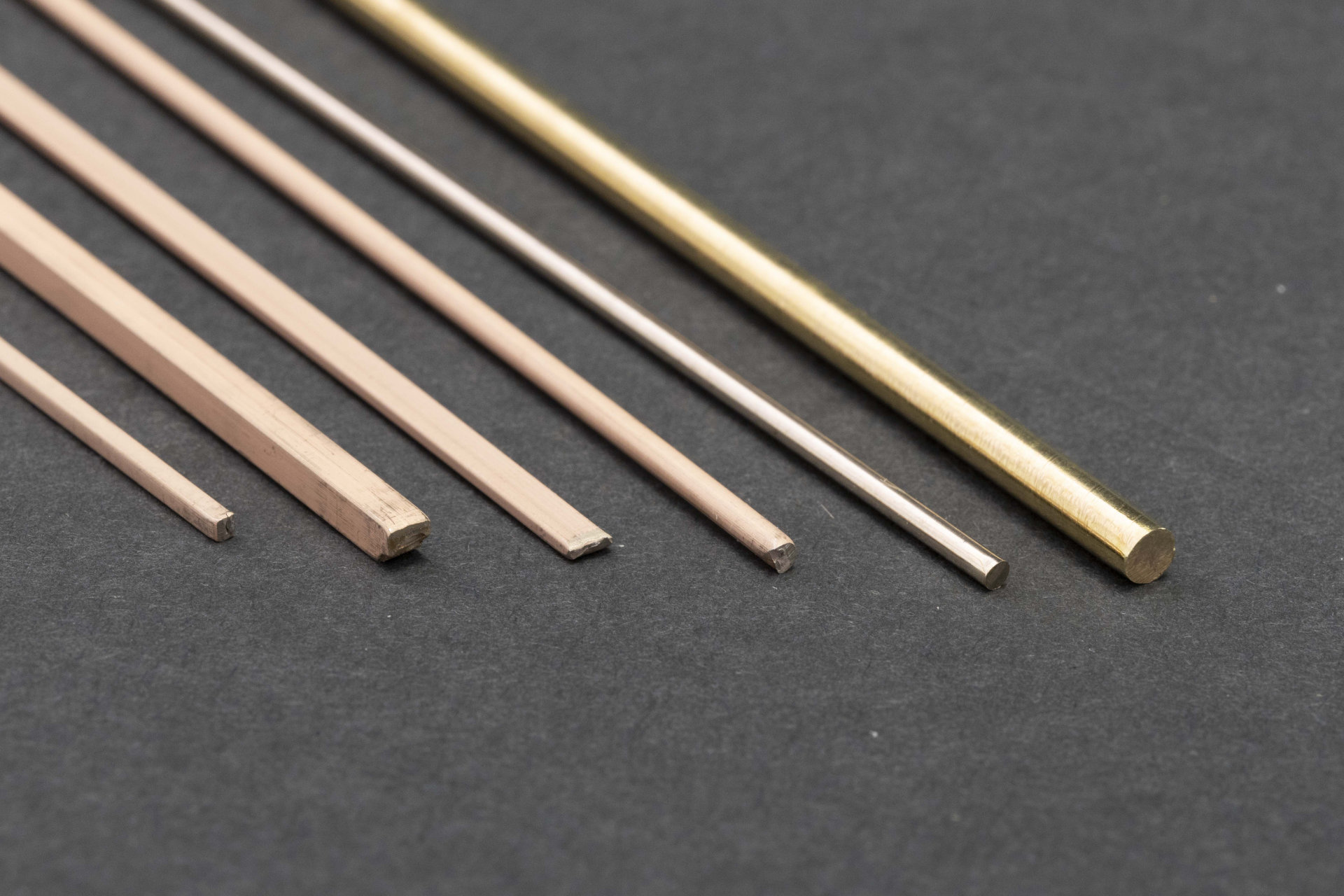
The main alloy families used include:
These alloys provide excellent joint strength, good wetting characteristics and reliable metallurgical bonding.
Key Characteristics
Compared to soft brazing, hard brazing offers:
- higher mechanical strength of the joint
- improved resistance to elevated temperatures
- greater long-term reliability
- suitability for structural or demanding applications
For these reasons, hard brazing is widely used across many industrial sectors.
Industrial Applications
Hard brazing is commonly applied in:
- HVAC and refrigeration systems
- heat exchangers
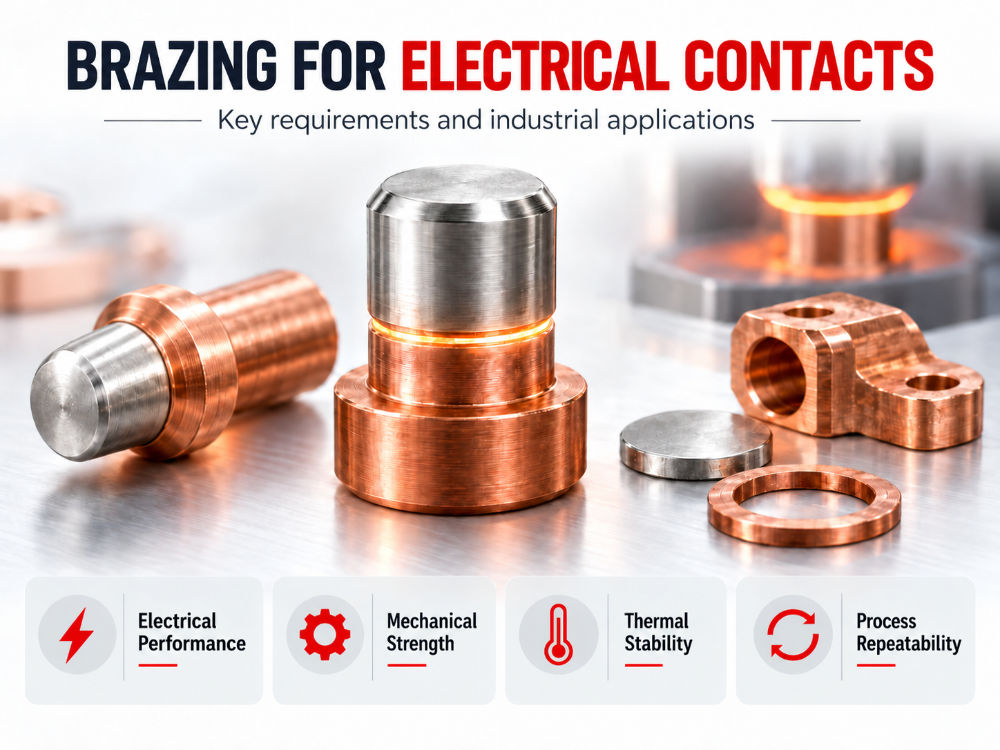
- electrical contact components
- automotive parts
- mechanical tools and components
In these applications, joint quality is essential to ensure tightness, durability and long-term reliability.
The Role of Fluxes in Brazing
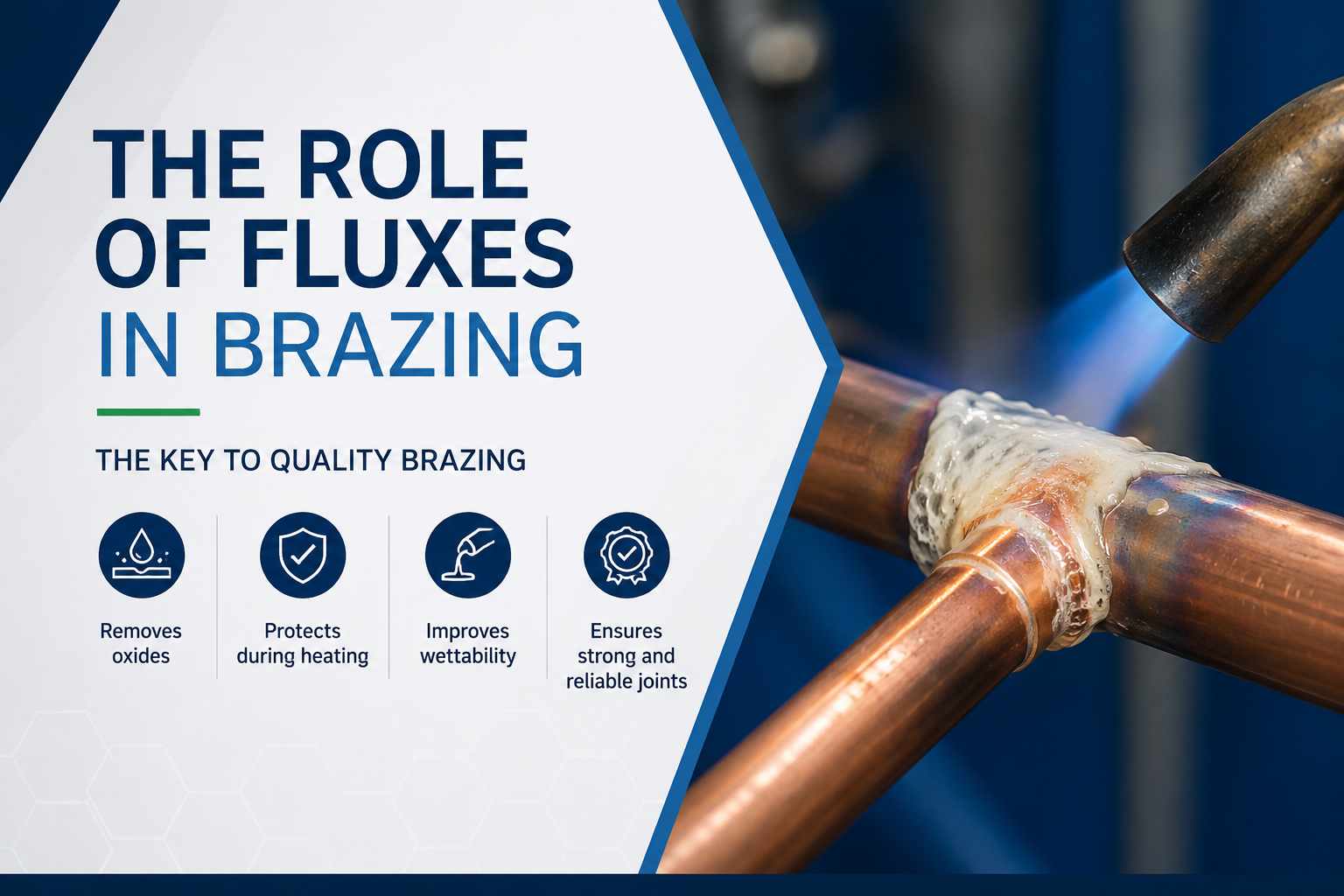
During the brazing process, oxidation of the metal surfaces can prevent the molten filler metal from properly wetting the base materials. For this reason, the use of fluxes for brazing is essential.
Fluxes perform several important functions:
- removing oxides from metal surfaces
- protecting the materials from oxidation during heating
- improving wetting and filler metal flow
The selected flux must be compatible with the brazing alloy, the base materials and the operating temperature of the process.
Comparison Between Soft and Hard Brazing
The main differences between the two processes can be summarized as follows:
| Characteristic | Soft Brazing | Hard Brazing |
| Working temperature | < 450 °C | > 450 °C |
| Alloys used | Tin-based alloys | Copper or silver-based alloys based |
| Mechanical strength | Limited | High |
| Temperature resistance | Low | High |
| Typical applications | Electronics, small assemblies | HVAC, heat exchangers, industrial components |
How to Choose the Right Process
The choice between soft brazing and hard brazing mainly depends on:
- base materials to be joined
- service conditions of the joint
- expected mechanical loads
- operating temperature
- durability and reliability requirements
In industrial applications requiring higher performance, hard brazing with suitable brazing alloys is generally the most reliable solution.
Conclusion
Soft brazing and hard brazing represent two complementary joining technologies, each with specific characteristics and fields of application.
While soft brazing is ideal for light-duty applications and heat-sensitive components, hard brazing allows the creation of stronger and more durable joints suitable for more demanding operating conditions.
The correct selection of brazing alloys, fluxes for brazing and process parameters is essential to ensure long-term joint quality and reliability.